Uncovering Connections Between Developer APIs and Secure Transaction Protocols Across Worldwide Virtual Casino Networks
Written by Paul Schröder · Aug 7, 2026
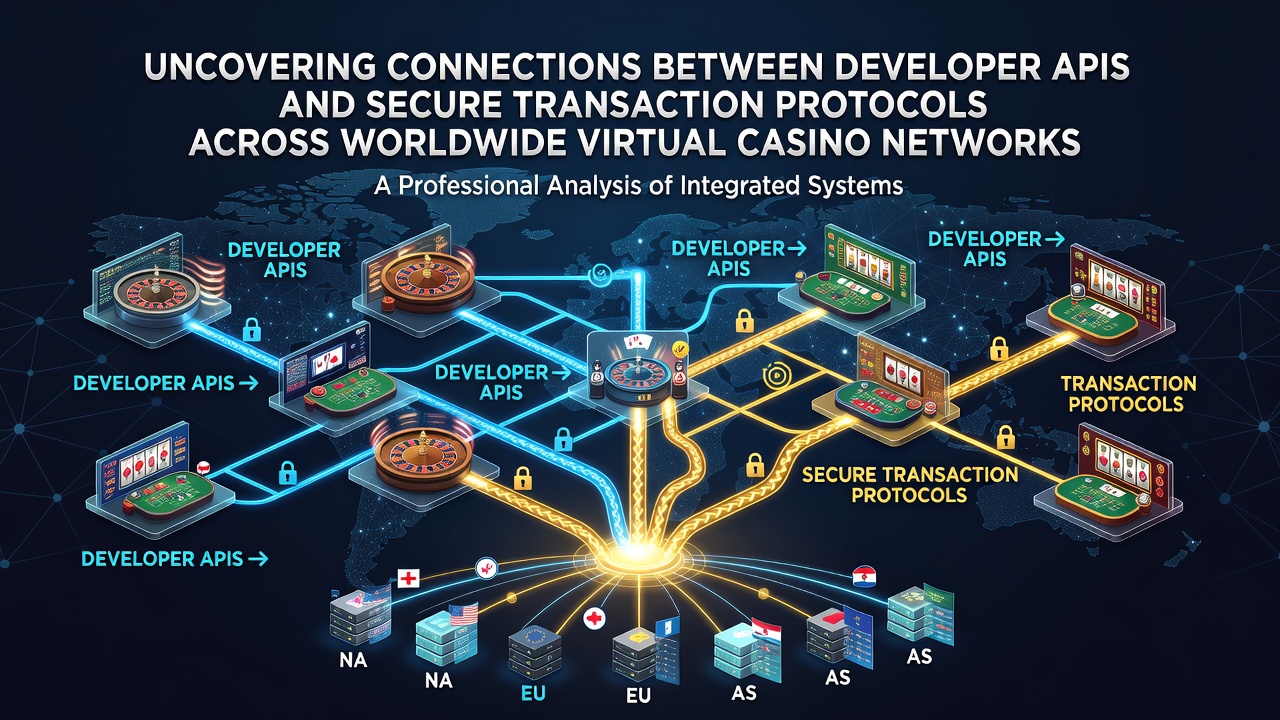
Uncovering Connections Between Developer APIs and Secure Transaction Protocols Across Worldwide Virtual Casino Networks
Virtual casino networks rely on developer APIs to bridge game engines with payment systems while secure transaction protocols handle encryption and verification steps across multiple jurisdictions. These connections allow operators to process deposits and withdrawals without exposing raw user data at each stage of the flow. Researchers tracking platform architectures note that standardized API endpoints often map directly to protocol layers such as TLS 1.3 handshakes and token-based authentication schemes.
API Structures in Casino Software Ecosystems
Game studios publish APIs that expose functions for balance checks, bet placement, and result reporting, yet these endpoints must route through payment gateways secured by protocols like OAuth 2.0 and JSON Web Tokens. In practice the API layer translates player actions into transaction requests that carry encrypted payloads, and the receiving protocol validates signatures before any funds move. Observers examining code repositories find that many studios implement rate-limiting and IP whitelisting at the API gateway to reduce exposure during high-volume periods.
Data from industry audits shows that roughly 70 percent of licensed platforms in regulated markets route API calls through middleware that enforces protocol compliance before reaching core banking systems. This middleware logs each request with timestamps and session identifiers, creating audit trails that regulators review during compliance checks. Those who maintain these systems report that minor mismatches between API schema versions and protocol cipher suites can trigger automatic transaction halts until synchronization occurs.
Global Transaction Protocol Standards
Secure transaction protocols vary by region yet share core requirements for data integrity and non-repudiation. Platforms operating across North America, Europe, and Asia-Pacific regions often adopt PCI-DSS aligned encryption while adding jurisdiction-specific rules for token storage. In August 2026 several operators updated their protocol stacks to support post-quantum key exchange algorithms in anticipation of future regulatory guidance from bodies such as the American Gaming Association.
European operators frequently align with eIDAS standards for electronic identification, which requires APIs to accept qualified digital signatures during high-value transfers. Meanwhile Canadian provincial regulators emphasize real-time monitoring of protocol logs to detect anomalies in transaction velocity. These differences create a patchwork where a single API call may traverse multiple protocol variants depending on the player’s location and chosen payment rail.

Integration Patterns Observed in Production Environments
Production deployments commonly place an API orchestration layer between the game client and the transaction processor, and this layer applies protocol-specific transformations such as converting internal session tokens into externally signed payment requests. Case studies from large-scale operators indicate that asynchronous messaging queues decouple API responses from protocol confirmations, allowing games to continue while settlement occurs in the background. When a protocol returns a failure code the orchestration layer triggers a rollback that restores the player balance through a separate API call.
Network diagrams published by research groups illustrate how API gateways sit behind load balancers that distribute traffic across regional data centers, each running protocol stacks tuned for local latency requirements. In one documented configuration an API request originating in Australia routes through an Asian gateway before reaching a European transaction processor, and the protocol must preserve end-to-end encryption across every hop. Such multi-region paths increase the importance of consistent key management practices across all participating systems.
Security Controls and Compliance Mapping
Encryption standards at the protocol level map to API authentication mechanisms through shared certificate authorities, and operators maintain centralized key vaults that both layers query during each transaction cycle. Reports from the European Gaming and Betting Association highlight that regular penetration testing now includes simulated API abuse scenarios designed to probe protocol weaknesses. Findings from these tests often lead to updates in both API validation rules and protocol cipher preferences within the same maintenance window.
Cross-border operators maintain separate compliance teams that track how API changes affect protocol certification status in each market. A modification to an API endpoint that returns additional metadata may require re-validation of the surrounding protocol implementation to ensure no sensitive fields leak in transit. These teams coordinate release schedules so that both components reach production in synchronized updates.
Conclusion
The documented connections between developer APIs and secure transaction protocols continue to shape how virtual casino networks handle player funds across borders. As platforms expand geographic reach, the need for coordinated updates between these two layers remains a central operational requirement. Industry documentation and regulatory filings provide ongoing evidence that alignment between API design choices and protocol specifications determines both transaction speed and audit readiness in worldwide deployments.