Investigating How Payment Gateway Certifications Affect Access to Exclusive Game Releases in Regulated Online Environments
Written by Frankie Bauer · Jun 30, 2026
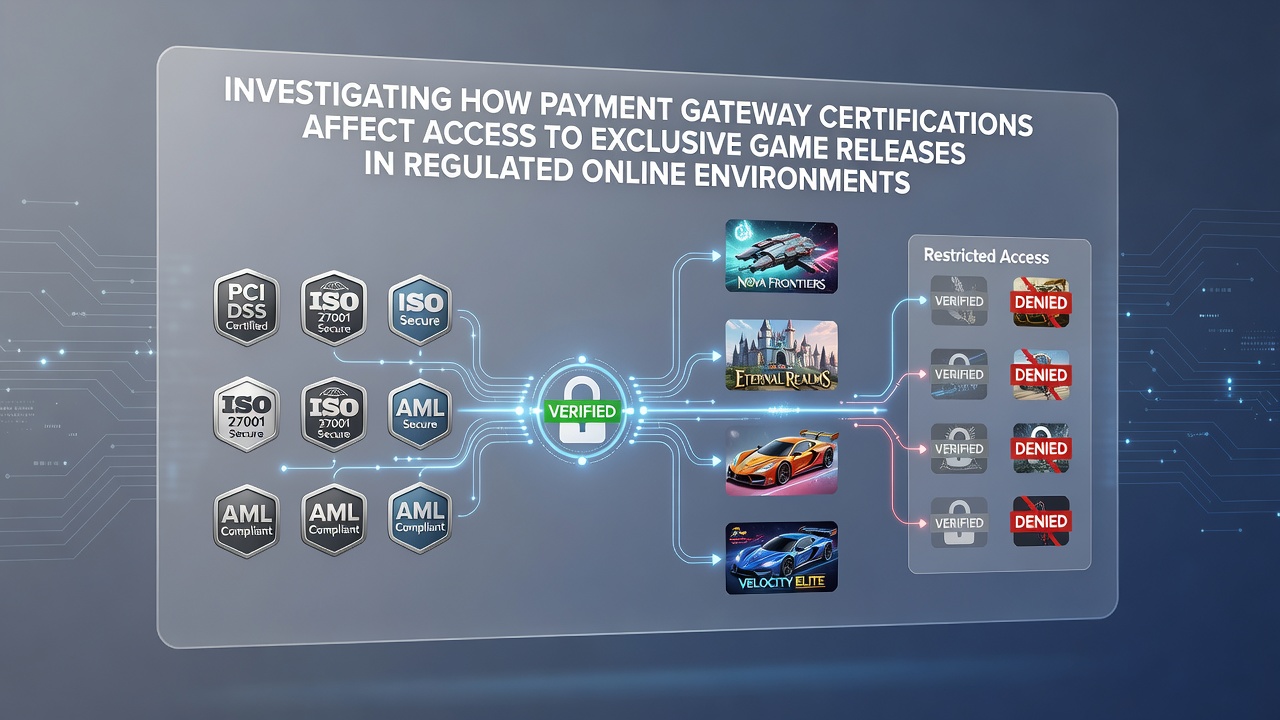
Investigating How Payment Gateway Certifications Affect Access to Exclusive Game Releases in Regulated Online Environments
Payment gateway certifications serve as foundational requirements in regulated online gaming environments where platforms must demonstrate compliance with security standards before they can process transactions. These certifications encompass frameworks such as PCI DSS alongside jurisdiction-specific protocols that verify encryption methods, fraud detection systems, and audit trails. Developers of exclusive game releases often tie distribution rights to certified payment infrastructure, which creates direct linkages between financial processing approvals and content availability. Regulatory bodies across multiple regions enforce these standards to maintain integrity within digital ecosystems. In the United States, state agencies like the New Jersey Division of Gaming Enforcement require platforms to integrate certified gateways before authorizing premium titles from major studios. Similar patterns appear in European markets where certification bodies evaluate gateway providers on criteria including transaction monitoring and player fund segregation. Data from industry reports indicates that platforms lacking full certification face delays of several months when attempting to launch limited-time releases.Certification Pathways and Technical Requirements
Gateways undergo rigorous testing cycles that evaluate their ability to handle high-volume transactions while adhering to data protection mandates. Observers note that certification involves third-party audits which assess everything from API security to real-time reporting capabilities. Studios releasing exclusive content frequently mandate that operators use gateways holding current certifications because these ensure seamless reward distribution and prevent settlement issues during promotional windows.
Platforms that secure certifications gain priority access to titles featuring advanced mechanics or limited distribution deals. Research from academic studies on digital gaming networks shows correlations between certified payment systems and faster onboarding of new releases, particularly in multi-jurisdictional operations. Those who've examined integration logs find that uncertified gateways trigger automatic blocks from studio content servers, effectively restricting player access until compliance gaps close.
Regional Variations in Impact
June 2026 marks several updates to certification timelines across North American and Asian markets, with new encryption benchmarks scheduled for implementation. In Canada, provincial regulators have aligned gateway standards with international benchmarks, which has streamlined access for operators handling cross-border exclusive releases. Australian authorities through bodies like the New South Wales Independent Gaming Authority have documented cases where certified gateways enabled earlier deployment of titles compared to non-certified competitors.
What's interesting is how these requirements create tiered access levels among operators. Larger platforms with dedicated compliance teams navigate certification renewals more efficiently, whereas smaller entities encounter bottlenecks that delay exclusive content integration. Evidence from trade association data reveals that certification status directly influences contract negotiations with game developers, often determining whether a platform receives early access codes or must wait for wider distribution phases.

Case Examples from Licensed Platforms
One documented instance involves a multi-state operator that upgraded its gateway certification in early 2025, which subsequently unlocked a series of studio-exclusive titles previously unavailable in certain regions. The upgrade involved implementing enhanced tokenization protocols that satisfied both financial and gaming regulatory criteria. Analysts tracking release schedules observed that this change coincided with expanded content libraries during subsequent quarters.
Another situation emerged when an emerging platform attempted integration without updated certifications, resulting in temporary suspension of transaction processing features tied to reward pathways. Developers responded by withholding access to the exclusive release until full verification occurred. Such examples illustrate the mechanical connections between certification status and content pipelines without implying value judgments on operational strategies.
Data Trends and Integration Patterns
Figures from gaming technology research indicate rising numbers of certified gateway providers entering the market between 2024 and 2026, driven by demand for specialized solutions that interface directly with loyalty systems. These solutions facilitate real-time crediting of player accounts during exclusive promotions, which studios require as part of distribution agreements. Patterns show that platforms maintaining continuous certification enjoy more consistent release schedules across regulated environments.
Academic examinations of transaction data flows highlight how certification standards reduce friction in cross-device reward deliveries, allowing exclusive games to function reliably regardless of player location within licensed jurisdictions. Industry organizations continue to publish guidelines that refine these standards, incorporating feedback from gateway vendors and platform operators alike.
Conclusion
Payment gateway certifications function as gatekeepers that shape the timing and availability of exclusive game releases within regulated online spaces. Their technical and compliance demands create measurable effects on platform capabilities, influencing everything from contract eligibility to deployment timelines. As standards evolve through 2026 and beyond, these certifications will remain central to how operators connect financial infrastructure with premium content ecosystems across diverse regulatory landscapes.