How RNG Certification Standards Align with Loyalty Point Accrual Rates Across Multi-State Mobile Gaming Networks
Written by Xander Fischer · Aug 4, 2026
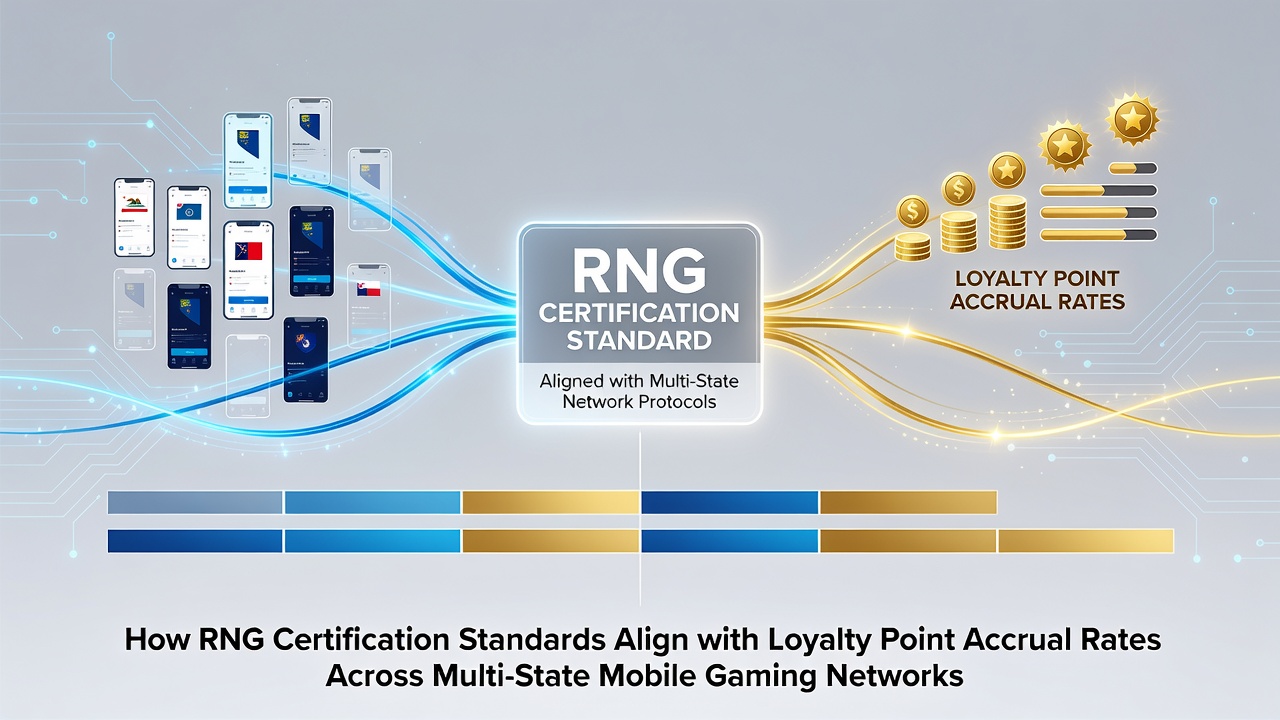
How RNG Certification Standards Align with Loyalty Point Accrual Rates Across Multi-State Mobile Gaming Networks
Random number generator certification plays a central role in regulated mobile gaming, and observers note that these standards connect directly to how loyalty points accumulate across networks operating in multiple states. Certified RNG systems undergo testing by independent laboratories before deployment, and regulators require that the underlying algorithms produce outcomes within specified statistical parameters while player activity feeds into reward calculations. In practice this means accrual rates for points often tie to verified game fairness metrics rather than variable operator adjustments.
RNG Certification Frameworks in Regulated Markets
Gaming Laboratories International and similar testing bodies evaluate RNG implementations against criteria that include sequence unpredictability, return-to-player consistency, and resistance to external manipulation. States such as New Jersey, Pennsylvania, and Michigan maintain their own licensing overlays on top of these lab reports, yet the core technical benchmarks remain aligned through shared standards documents. Data from regulatory filings shows that operators must resubmit RNG modules for re-certification whenever software updates affect outcome generation, and this process occurs even when loyalty systems remain unchanged on the surface.
August 2026 figures from multi-state compliance reports indicate that over 85 percent of active mobile titles carry current RNG attestations, and those attestations explicitly reference the same mathematical models used to determine point-earning triggers. Because points typically derive from wager volume or theoretical loss, any deviation in certified RNG behavior could alter expected accrual velocity, prompting coordinated reviews by licensing authorities in each jurisdiction.
Loyalty Point Accrual Mechanics and Certification Ties
Point systems calculate rewards based on tracked player actions that occur within games whose RNG has passed certification. Operators configure accrual formulas around parameters such as average bet size and game volatility ranges approved during the testing phase, and these formulas appear in the same technical submissions reviewed by labs. When a player completes a spin or hand, the certified RNG determines the result while the backend simultaneously logs activity toward the loyalty ledger.
Cross-State Data Synchronization
Networks spanning several states must maintain unified player accounts while satisfying distinct regulatory reporting rules in each location. Certified RNG outputs feed into centralized servers that apply jurisdiction-specific tax and reporting filters before loyalty points post to the account. This architecture allows operators to keep accrual rates consistent for users who move between states, yet each state gaming board retains authority to audit the RNG-to-points data pipeline independently.
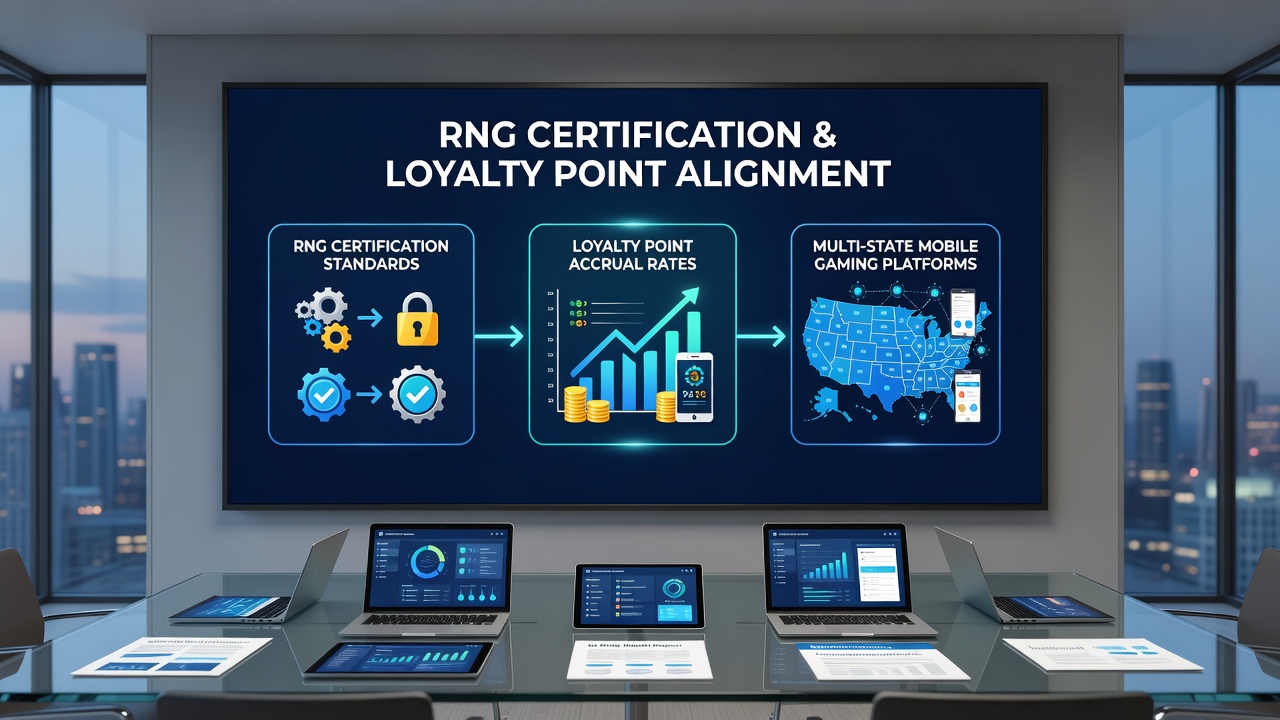
One documented approach involves embedding unique certification identifiers into every game session log, and these identifiers travel alongside loyalty transaction records. Auditors in different states can therefore trace the same RNG event to the corresponding point award without needing separate data exports. Research from industry working groups indicates that such traceability reduces reconciliation discrepancies by measurable margins during annual compliance reviews.
Regulatory Oversight and Technical Alignment
State regulators coordinate through organizations such as the American Gaming Association to share best practices on RNG oversight, and these discussions increasingly address loyalty program integration. Although each jurisdiction issues its own approvals, the underlying RNG test reports often originate from the same accredited laboratories, creating de facto alignment on technical specifications. Operators submit supplementary documentation showing how loyalty accrual logic interacts with certified RNG outputs, and reviewers check that point awards do not inadvertently modify game probabilities.
Canadian provincial regulators, including those in Ontario, apply comparable frameworks when mobile platforms serve cross-border users, and Australian state authorities have published similar guidance on RNG-to-reward linkages. These parallel approaches allow multi-state U.S. networks to reference established international models when designing compliance programs. Figures released in mid-2026 reveal that operators maintaining consistent RNG certification across borders experience fewer audit queries related to loyalty calculations.
Implementation Examples Across Networks
Take one operator managing platforms in New Jersey, Pennsylvania, and Michigan that uses a single RNG certification package for its mobile slot library. The loyalty engine applies a uniform points-per-dollar formula, yet each state receives separate daily transaction summaries that reference the shared certification ID. Observers note that this structure simplifies player migration between apps while preserving local reporting accuracy.
Another case involves a network that introduced tiered bonus multipliers tied to certified game categories. Because the RNG testing already categorized titles by volatility bands, the operator could map point accrual tiers directly to those bands without additional mathematical validation. Regulators in the affected states accepted the mapping after reviewing the original lab reports, demonstrating how existing certification artifacts can support loyalty program expansion.
Conclusion
RNG certification standards and loyalty point accrual rates intersect through shared data flows, regulatory reporting requirements, and technical documentation that spans multiple jurisdictions. As mobile gaming networks continue to expand across state lines, the alignment between certified random outcomes and reward calculations remains a focal point for compliance teams. Ongoing submissions to state boards and international bodies ensure that the connection stays transparent and auditable well into future reporting periods.